What does Microneedling do?
June 2026
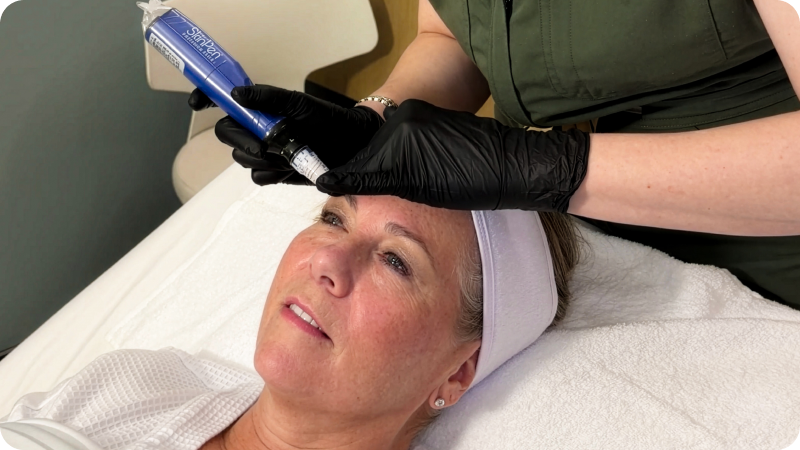
Microneedling is a minimally invasive treatment that creates controlled micro-injuries in the skin to stimulate repair, encourage collagen production and support smoother, firmer-looking skin over time. Rather than creating an immediate cosmetic shift, microneedling works by prompting the body’s own regenerative response.
For patients concerned with early aging, uneven texture, enlarged pores, or residual acne scarring, that makes it one of the more versatile tools in modern aesthetic care. The goal is not a dramatic change overnight. It is skin that looks stronger, more refined and more resilient over time.
Why Microneedling Has Become so Relevant
Aesthetic medicine has increasingly shifted toward treatments that support regeneration rather than simply correction. Patients are often looking for change that feels cumulative, subtle and grounded in skin health. Microneedling fits naturally into that shift.
As collagen production declines with age, the skin can begin to look less firm, less luminous and less even in texture. Acne can also leave behind textural changes that topical skincare alone may not meaningfully improve. For these concerns, microneedling can be a considered option because it supports the skin’s ability to rebuild rather than simply masking what appears on the surface.
How Microneedling Works
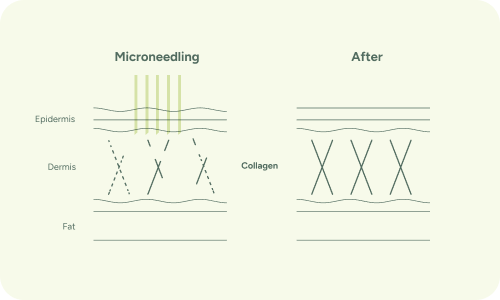
During treatment, a microneedling device creates tiny channels in the skin. The body responds by initiating repair, including tissue remodeling and new collagen production in the weeks that follow.
This process is also described by the American Society for Dermatologic Surgery, which refers to microneedling as percutaneous collagen induction. The timeline matters. Microneedling does not function like a filler or a treatment designed for immediate correction. Its value lies in gradual improvement as the skin responds to controlled stimulation.
What Microneedling Can Help Address
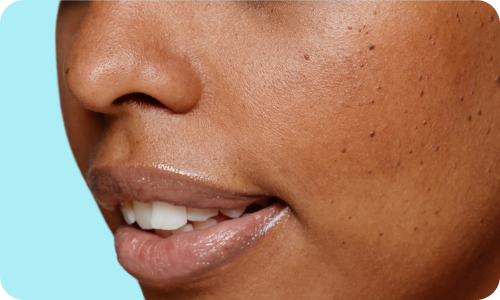
Microneedling is often used for concerns related to texture, tone and mild structural change. Acne scarring is one of the best-known reasons patients pursue it, particularly when scars leave the skin looking uneven or pitted. It is also commonly considered for enlarged pores, fine lines, dullness and rough or crepey texture.
Microneedling can offer meaningful benefits, but it is not a catch-all solution. It works best when chosen for the right concern, at the right time and within a treatment plan that reflects the patient’s skin, goals and medical history.
What the Evidence Suggests
The evidence around microneedling continues to grow. Clinical research has supported its role in acne scars treatment, textural refinement and overall skin rejuvenation. A 2024 network meta-analysis published in Archives of Dermatological Research reviewed 24 randomized controlled trials involving 1,546 participants and found that microneedling, both alone and in combination with other treatments, is a studied option for improving acne scars. The review also found that combination approaches may offer stronger results than microneedling alone.
That does not mean every patient needs a complex protocol. It means the treatment is credible, studied and best understood as one tool within a more personalized approach to care.
This is also where clinical oversight matters. The American Academy of Dermatology notes that microneedling performed by a board-certified dermatologist may produce more significant and longer-lasting improvement than at-home devices. Quality in aesthetic medicine comes not only from the device itself, but from judgment, technique and patient selection.
How Microneedling Fits Into a Broader Care Plan
At Moda Wellness, microneedling is approached as one part of an intentional skin health strategy shaped by each patient’s goals, history and desired results. For some patients, it may complement aesthetic medicine by supporting long-term skin quality. For others, it may sit alongside laser therapy when pigment, redness, or resurfacing concerns are also present. Those interested in gradual tissue support may also explore collagen stimulation treatments.
Patients ready to take the next step can book an appointment to learn whether microneedling may be appropriate for their skin, goals and care plan.
Frequently asked questions
Microneedling creates controlled micro-injuries that stimulate the skin’s natural repair process. Over time, this can support collagen production, smoother texture, softer-looking acne scars and firmer-looking skin.
Microneedling is commonly used to improve the appearance of acne scars, especially textural or pitted scars. Results are gradual and often require a series of treatments.
Some patients notice a refreshed appearance within a few weeks, but collagen remodeling develops over time. More visible improvement often appears after multiple treatments and may continue over several months.
Downtime is usually minimal. Redness, tightness, dryness, or mild sensitivity can occur for a few days, depending on treatment depth and individual skin response.
Microneedling may be a good fit for patients concerned with uneven texture, acne scars, fine lines, enlarged pores, or dullness. A consultation helps determine whether it is appropriate for your skin and goals.
Yes. Depending on your goals, microneedling may complement aesthetic medicine, laser therapy, or other collagen stimulation treatments as part of a broader skin health plan.
Clinical references
American Academy of Dermatology Association. Microneedling: Can it help fade scars?
American Society for Dermatologic Surgery. Microneedling.
Li H, Jia B, Zhang X. Comparing the efficacy and safety of microneedling and its combination with other treatments in patients with acne scars: a network meta-analysis of randomized controlled trials. Archives of Dermatological Research. 2024;316:505.
Featured Articles

Collagen stimulation treatments
Collagen stimulation treatments have become increasingly central to aesthetic medicine because they reflect a more sophisticated understanding of skin aging.
What is laser therapy?
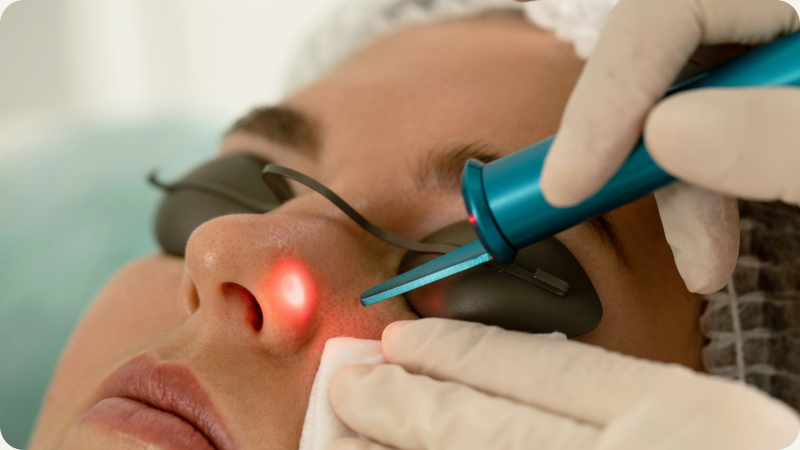
Due to its precision, laser therapy has become an important part of modern aesthetic medicine.

What does a functional medicine doctor do?
A functional medicine doctor is a clinician who takes a broader, systems-based view of health.